Advertisement
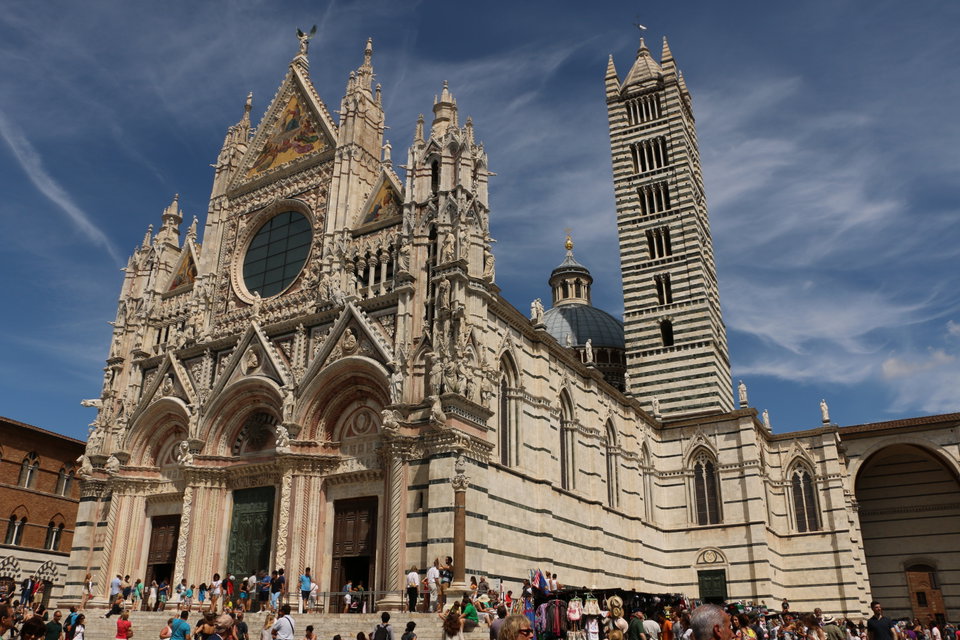
The Duomo in Siena lies in a piazza above the Piazza del Campo, a great Gothic building filled with treasures by Pisano, Donatello and Michelangelo as well as frescoes by Pinturicchio.
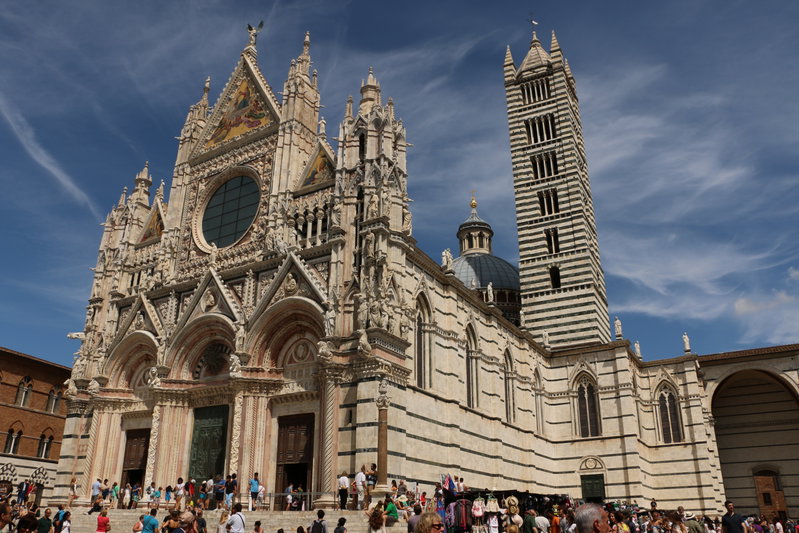
The exterior of the cathedral is pretty impressive, and if you don't have a lot of time in Siena, you might decide to not go inside and just enjoy the outside and that is totally fine but let me try to convince you to do otherwise!
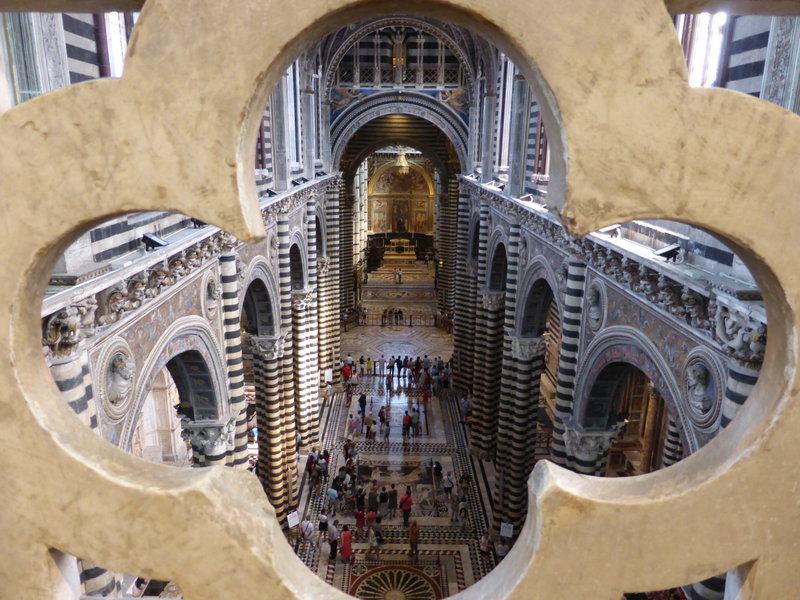
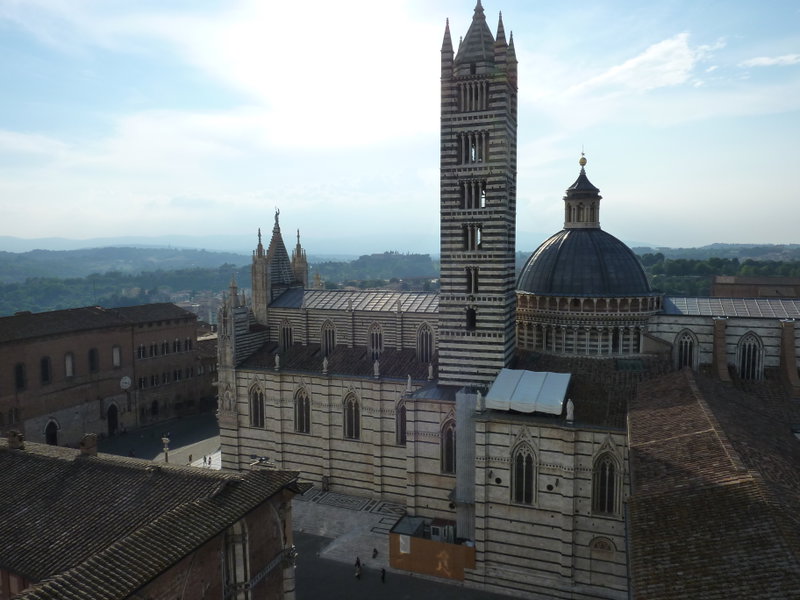
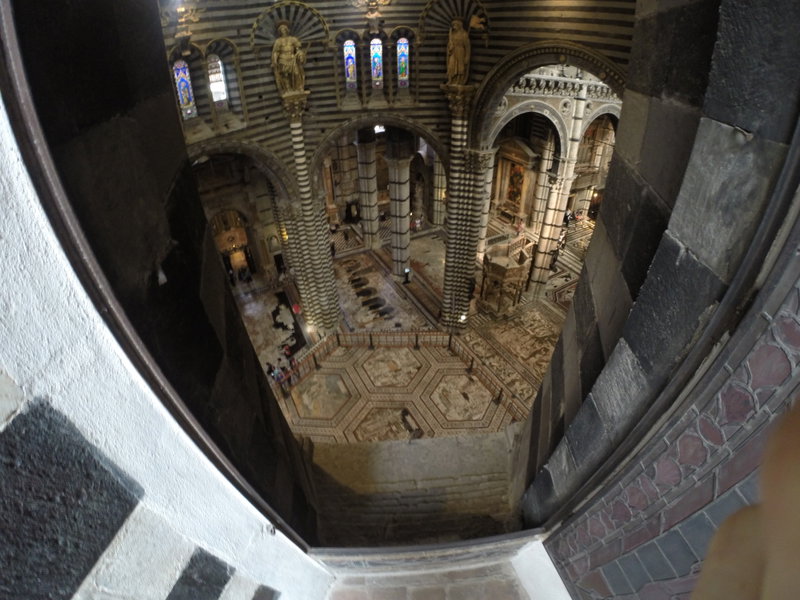
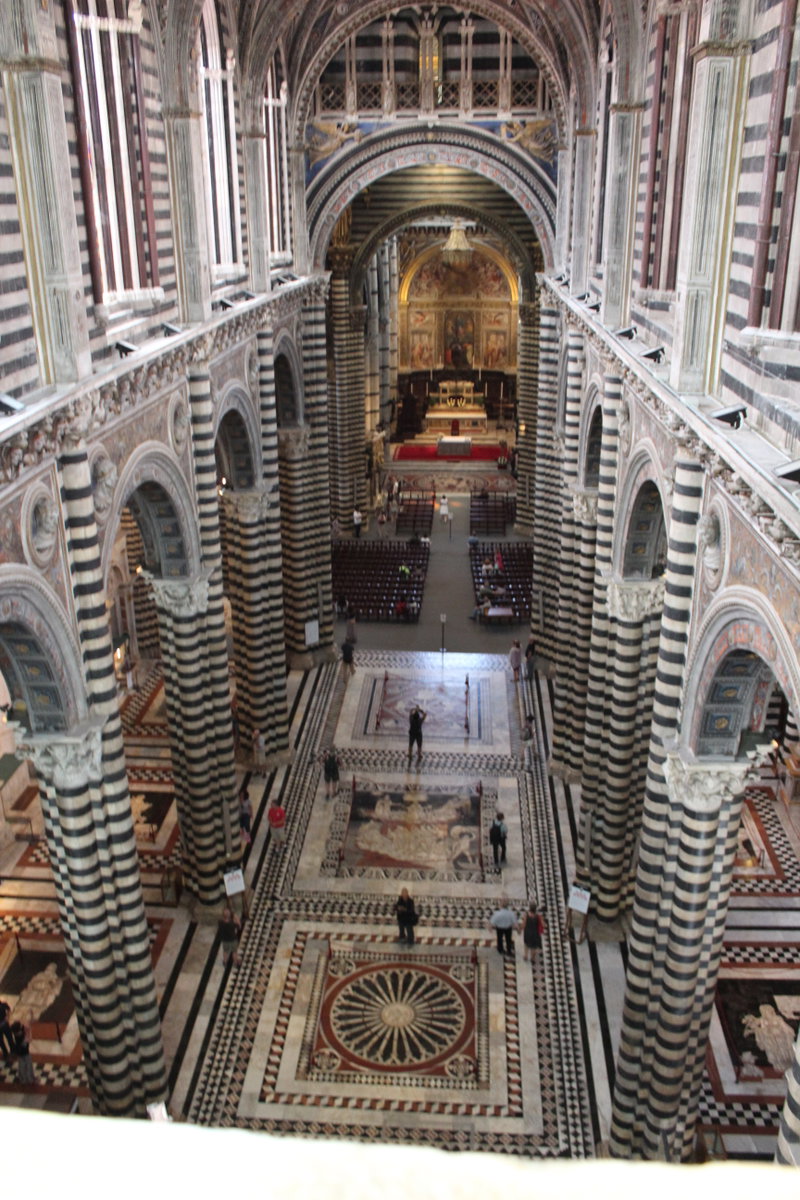
The cathedral was built between 1215 and 1263 on the site of an earlier structure, and is in the form of a Latin cross with a slight projecting dome and bell tower. Both the exterior and interiors are decorated in white and greenish-black marble in alternating stripes, black and white being the symbolic colors of Siena. Now look at the interiors in this photograph - what do you make of it?
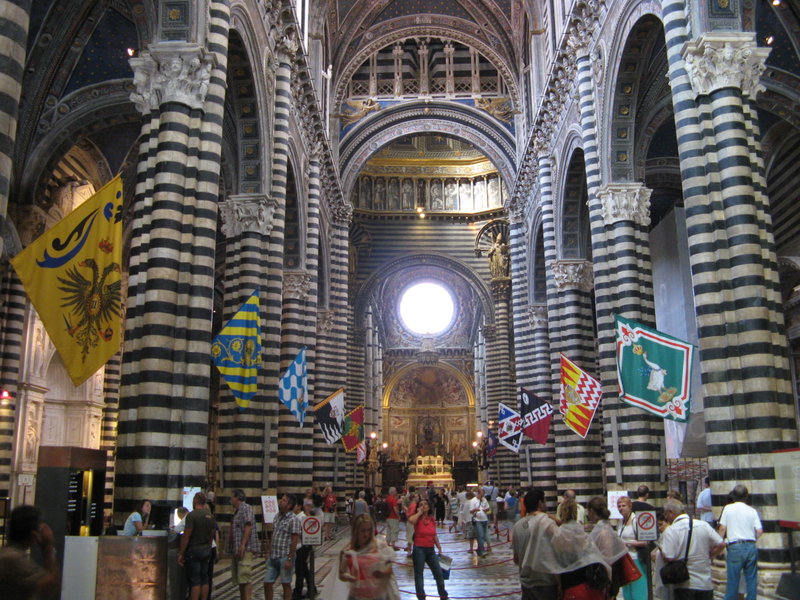
Seriously, if you have a little extra time to spare in Siena, make sure it is to go inside the cathedral. With the pass that lets you into the cathedral as well as the baptistery, crypt and Opera museum, the 10 euros are very well spent (12 euros when the pavement is uncovered)!
What's that wall?
The city planned to enlarge the cathedral, you can see by how much by that wall that sticks out to the right of the church since that was the only part that was built. Work started in the early 14th century but, in 1348, the Black Plague swept through the city and decimated the population of Siena. Work stopped and never restarted. That wall now provides a great platform to climb up to (access is through the Museo dell'Opera) and you can enjoy a wonderful panoramic view of Siena in all directions, including the nearby Piazza del Campo. 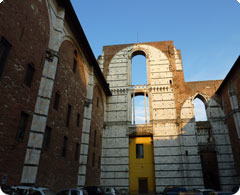
The Cathedral's Treasures
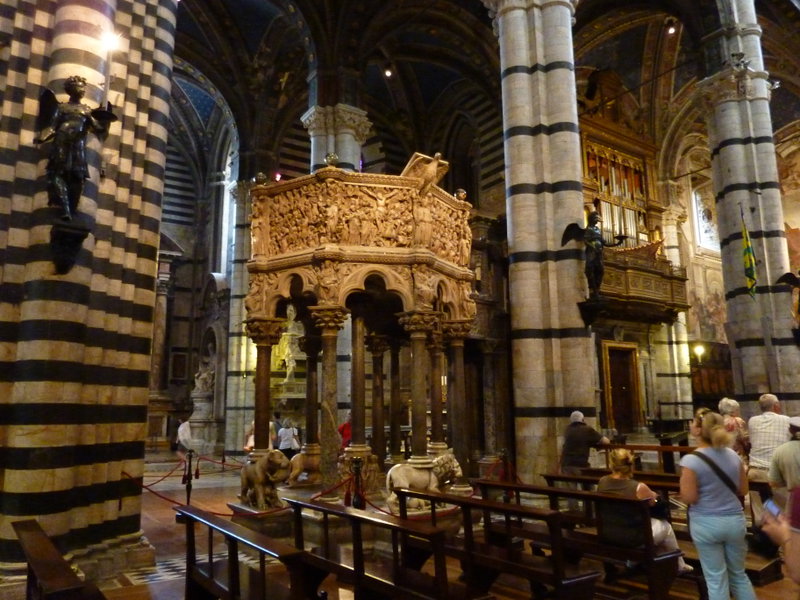
If you're visiting Siena after having visited Florence and its cathedral, you will be in for a shock! While Florence's cathedral is immense and its cupola impressive, its interior is pretty spartan in comparison to the exterior. In Siena, on the other hand, you don't know where to look once you step foot inside. The columns continue the white/black marble striped motif that you can see on the outside and, if you look up, there are busts of past religious men of Siena looking down upon you all around the cathedral.
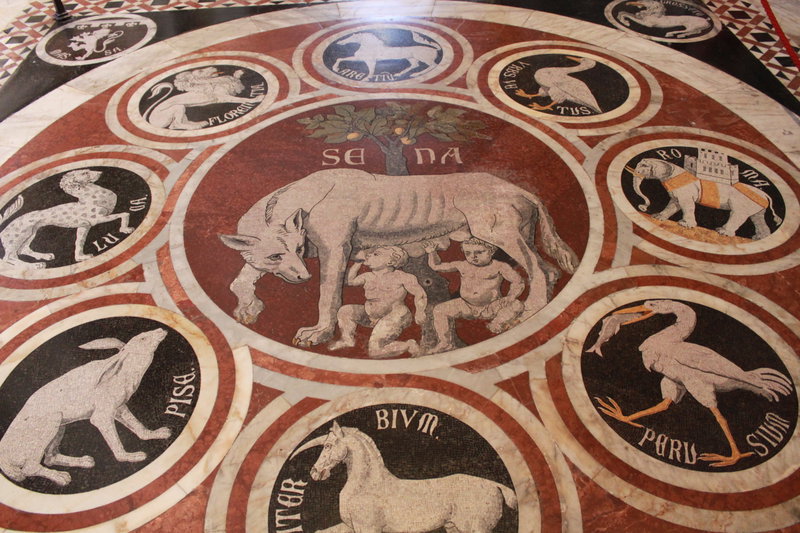
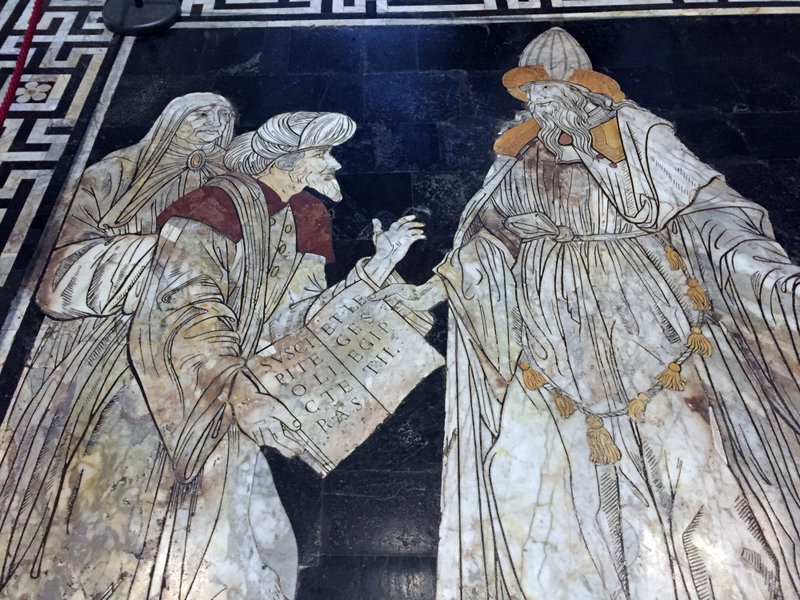
The most impressive and beautiful of the treasures the cathedral holds are right underfoot, on the floor, as the pavement is decorated with mosaics (using various techniques) to create storytelling masterpieces.
The 56 etched and inlaid marble panels were designed by 40 of leading artists between 1369 and 1547, all from Siena. The only exception was Bernardino di Betto, known as Pinturicchio who was actually from Umbria, the region to the south of Tuscany. Completion of the designs took six centuries, the last ones finished in the 1800s.
Today, the mosaic panels in the nave and aisles are usually uncovered although protected from passing feet by barriers, but the most precious ones are under the apse and in the transepts and these are generally protected by special flooring since this is where people sit for mass. These can be seen during special periods every year where they are uncovered - generally in the summer, in honor of the Palio starting in June thorugh August, and from the second Palio up until the end of October. Make sure to check what the period of uncovering is when you're planning your visit to Siena.
In the central part of the Duomo, the only floor panel that is usually visible is in the left transept which is Matteo di Giovanni's fantastic 1481 Massacre of the Innocents (a theme with which the painter was obsessed, leaving us disturbing paintings of it in Siena in both the Palazzo Pubblico and in Santa Maria dei Servi).
The oldest designs are those in the center near the entrance: the Wheel of Fortune and the Sienese Wolf Surrounded by Symbols of Allied Cities (photo above), which date back to 1369 but which we know have been maintained and redone throughout the centuries as it wasn't customary to protect them and they were worn down by people stepping on them. Some of them have parts that are pretty worn out. Each panel has its own story: we invite you to look all around the cathedral and find the ones that appeal to you the most and then buy one of the small guides in the bookshop dedicated to the pavement that will tell you in detail the story in the panels you liked most.
More Riches
More treasures to look for inside the cathedral include the sculpture of St. John the Baptist by Donatello placed to the right after you pass the door into the Piccolomini Library, the main rose window at the back of the cathedral by Duccio di Buoninsegna (a copy, the original is in the museum now), and the marble pulpit by Nicola Pisano.
Works that belong to the Cathedral that are no longer there
-
Ambrogio Lorenzetti, Presentation at the Temple, is today at the Uffizi Gallery in Florence.
-
Pietro Lorenzetti, Birth of the Virgin, today can be found in the Museo dell'Opera del Duomo di Siena right next door.
-
Simone Martini and Lippo Memmi, Annunziation among the Saints Ansano and Margherita, also found at the Uffizi Gallery in Florence today.
-
Duccio di Buoninsegna, Maestà del Duomo di Siena, where some parts are found in the Museo dell'Opera del Duomo di Siena as well as other museums across the world
-
Donatello, Madonna of Forgiveness, luckily still in Siena, in the Museo dell'Opera del Duomo.
The Piccolomini Library
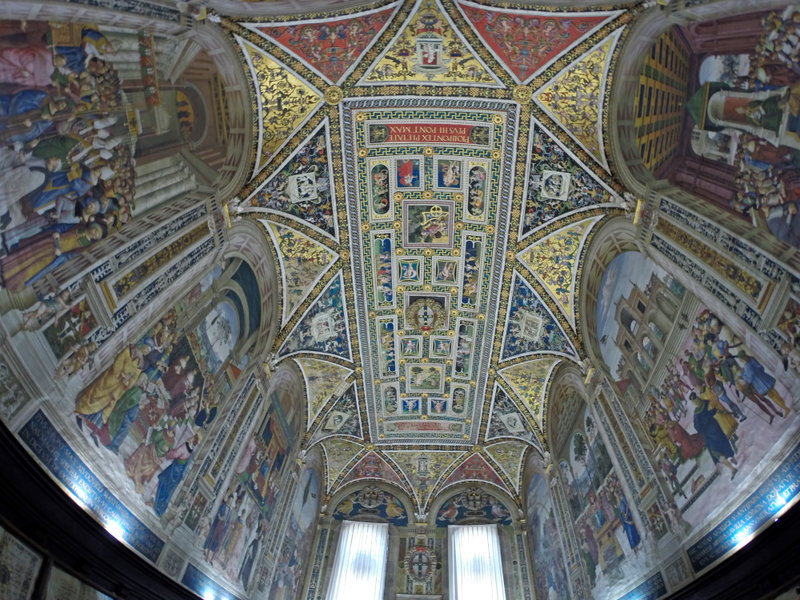
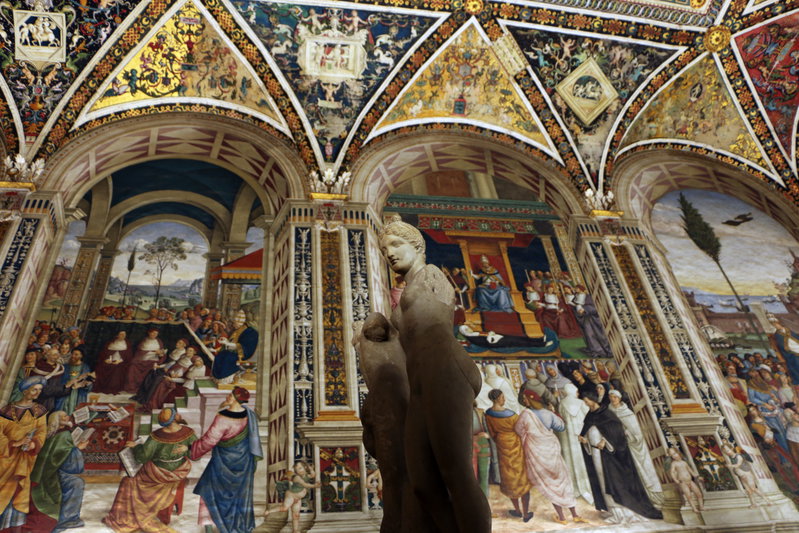
The other major treasure in the cathedral (there are too many to cite them all) is the Piccolomini Library. What's a library doing in a cathedral? We've got a whole article dedicated to the Piccolomini Library so you can discover its history by following that link!
Information on Tickets
You can buy your tickets ahead of time through the OPA Call Center by calling +39 0577 286300. Operators are available in all languages to help you book your tickets, even just one day before your visit. A great deal is to buy the OPA Si Pass, an all-inclusive ticket which is essentially a "pass" valid for 3 days that allows access to the Cathedral and the Piccolomini Library, the Museo dell'Opera, the Baptistery, Crypt, Oratory of San Bernardino and Diocesan Museum of Sacred Art. Rates vary according to the period of the year that you are visiting (whether the pavement is uncovered or not). Note that children under 11 enter the cathedral free but do pay for a pass.
If you want to book your Duomo (and Piccolomini Library) tickets ahead of time, our partner Viator sells them online (and from which we receive a small commission, thank you for your support).
You can use also book a visit to the Duomo as a part of a Tour.
Advertisement
Photo Gallery



Comments
Questions? Ask them on our free Forum →